Wiley · AI-supported strategy tool
Ladder
Turning brand and marketing context into a useful first read for campaign work.
- My role
- Concept, strategic logic and working prototype
- When
- 2026
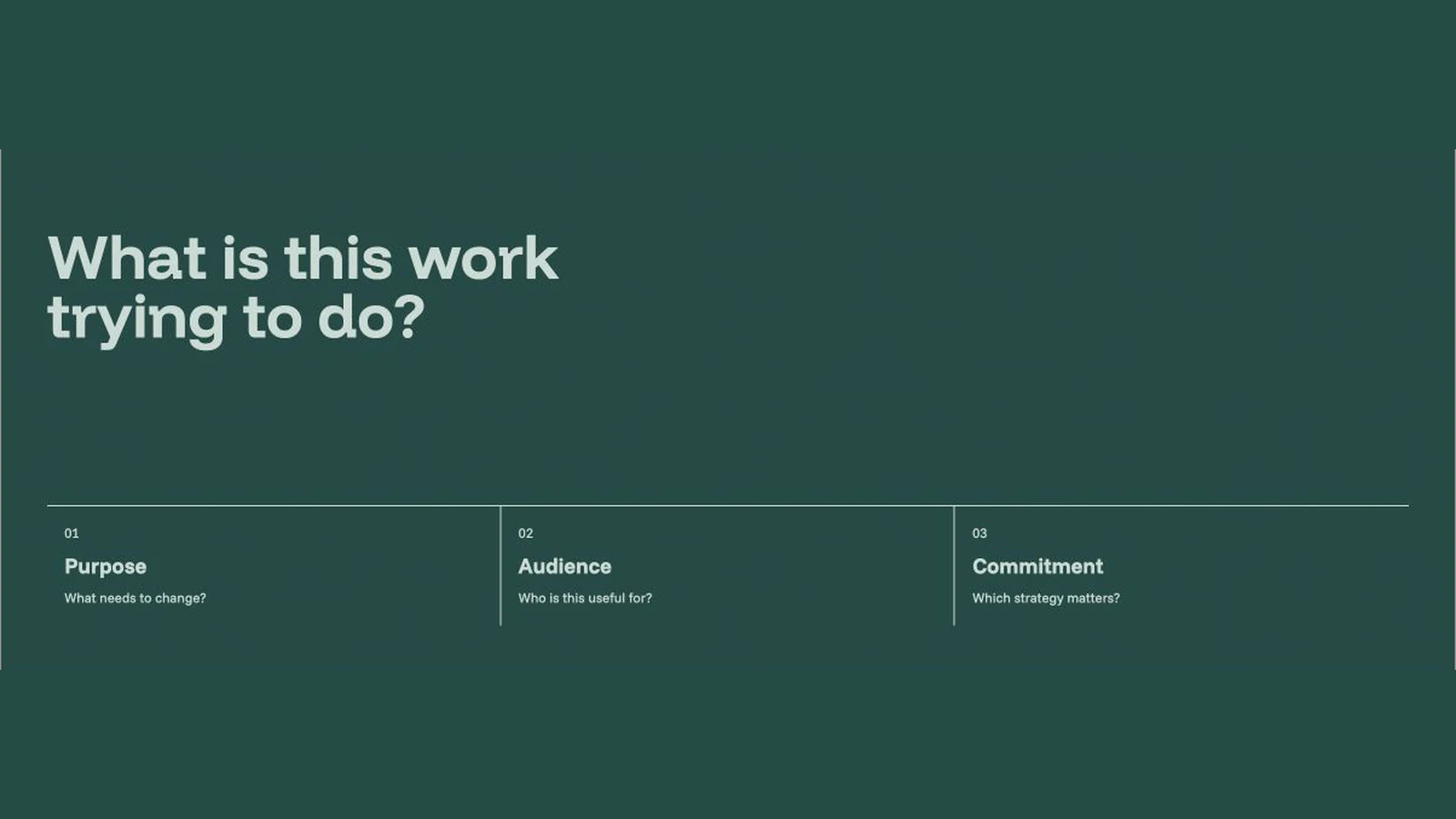
What is this work trying to do?
- 01PurposeWhat needs to change?
- 02AudienceWho is this useful for?
- 03CommitmentWhich strategy matters?
The work
Problem
Campaign feedback often arrives after the important decisions have already hardened. By then, teams are discussing execution while the underlying purpose, audience or strategic commitment is still unclear.
Constraint
The first read has to connect campaign work to current marketing goals and brand commitments without pretending a tool can make the judgement for the team. It needs to help early, before production gathers momentum.
Decision
I chose questions over automatic approval. Ladder reads a plan, script or piece of campaign copy against the strategy beneath it, then examines 3 things: purpose, audience and the relevant brand commitment.
I designed the strategic logic and built the working prototype. The boundary is deliberate: Ladder does not approve work or pretend to replace an experienced reviewer.
Privacy-safe workflow explanation
The working prototype uses private Wiley strategy and campaign material, so its raw inputs and outputs are not published here. The generic sample below explains the verified sequence without presenting it as interface evidence.
Generic sample
Brief in → Structured first read → Questions back
-
01
Brief in
“Explain a new service to first-time customers.”
-
02
Structured first read
Purpose · Audience · Commitment
-
03
Questions back
- What should change after someone sees this?
- Which first-time customer problem matters most?
- Which brand promise should shape the execution?
This is a privacy-safe explanation of the working sequence, not a screenshot of private campaign material or the prototype interface.
Result
There is now a working first-read tool that makes the idea testable. Its status is exact: entering team pilot, not in wider use.
What’s next
The pilot has three explicit criteria:
- whether the questions reveal a decision the brief omitted;
- whether strategists find the output useful;
- what must change before wider use.
Those findings will guide the next iteration.
Selected work
In the work